Holding company · est. 2024

We Build And Hold Operating Businesses.

Scallle is a holding company that grows a small number of operating businesses through systems, capital, and patience. No fund, no outside investors, no exit clock — so the right holding period is whatever the business actually needs.

Currently closed to new portfolio companies.

What every Scallle company gets

SystemsA shared operating spine, installed in the first ninety days.
CapitalFunded from operating cashflow. No LPs, no drawdown, no clock.
OperatorsPeople inside the business, not on a quarterly board call.
PatienceDecisions that pay back over years rather than quarters.

One operating spine, four contributions, held for as long as we are still useful.

How it works

Buy it, systemise it, keep it.

Three moves, in order, every time. Most of the work — and nearly all of the discipline — is in the first one.

Find businesses we understand

We acquire or build operating businesses in markets where we have an unfair amount of context — repeatable services, B2B software, supplier-side commercial work. We do not buy things we cannot run.

Candidate business

Under assessment

In progress
Repeatable work

Delivery model

Understood
Key-person risk

Owner dependency

Needs a plan
Cash generation

Financials

Reviewed
Install the systems that compound

Every Scallle company gets a shared spine — playbooks for hiring, finance, sales, and ops — installed in the first ninety days. Systems that look boring on paper, but compound for years afterwards.

Operator notes
Move the weekly numbers to Monday and give the ops lead the hiring budget before quarter end.
Ninety-day spine90d
Hiring playbook
Complete
Finance cadence
Complete
Hold for as long as it makes sense

We do not run a fund. There is no exit clock. Each company stays with Scallle while we are still useful to it — sometimes that is five years, sometimes it is twenty-five.

Weekly numbers
Every Monday
Finance
Cash runway
Below plan
Finance
Hiring plan
Two roles open
People
Pipeline review
Every fortnight
Go-to-market
Pricing review
Twice a year
Commercial
Churn check
Drifting up
Customer ops
Playbook refresh
Quarterly
Systems
Capacity plan
Next quarter
Operations
Supplier terms
Renewal due
Commercial
Operator 1:1
Every month
People
Key-person risk
Unresolved
Risk
Annual accounts
Next quarter
Finance
Weekly numbers
Every Monday
Finance
Cash runway
Below plan
Finance
Hiring plan
Two roles open
People
Pipeline review
Every fortnight
Go-to-market
Pricing review
Twice a year
Commercial
Churn check
Drifting up
Customer ops
Playbook refresh
Quarterly
Systems
Capacity plan
Next quarter
Operations
Supplier terms
Renewal due
Commercial
Operator 1:1
Every month
People
Key-person risk
Unresolved
Risk
Annual accounts
Next quarter
Finance
Weekly numbers
Every Monday
Finance
Cash runway
Below plan
Finance
Hiring plan
Two roles open
People
Pipeline review
Every fortnight
Go-to-market
Pricing review
Twice a year
Commercial
Churn check
Drifting up
Customer ops
Playbook refresh
Quarterly
Systems
Capacity plan
Next quarter
Operations
Supplier terms
Renewal due
Commercial
Operator 1:1
Every month
People
Key-person risk
Unresolved
Risk
Annual accounts
Next quarter
Finance

Approach

How we run a holding company

Six decisions that shape everything else — who we buy, how fast we move, and what we are willing to turn down. None of them are negotiable per company.

Operating focus

We run, we do not advise.

Every Scallle company has an operator-led day-to-day, and we are in it with them. Advice from a distance is cheap; sitting in the actual constraint is what changes the number.

Long horizons

Decades, not quarters.

Without outside capital we are free to make decisions that pay back over years. Patient money compounds; impatient money discounts. That single freedom shapes everything downstream.

Systems first

Boring playbooks, repeated well.

Hiring, finance, go-to-market, customer ops — installed from a shared spine in the first ninety days, then refined company by company until they fit the business rather than the template.

No outside capital

No fund. No LPs. No clock.

Scallle is funded from operating cashflow. That is not a badge — it is the constraint that decides how fast we hire, what we charge, and which opportunities we are allowed to ignore.

Few, deep

A small portfolio on purpose.

A handful of operating companies that get the same attention. We would rather pass on ten good ones than dilute the focus across all of them — which is why we are closed more often than open.

Thinking out loud

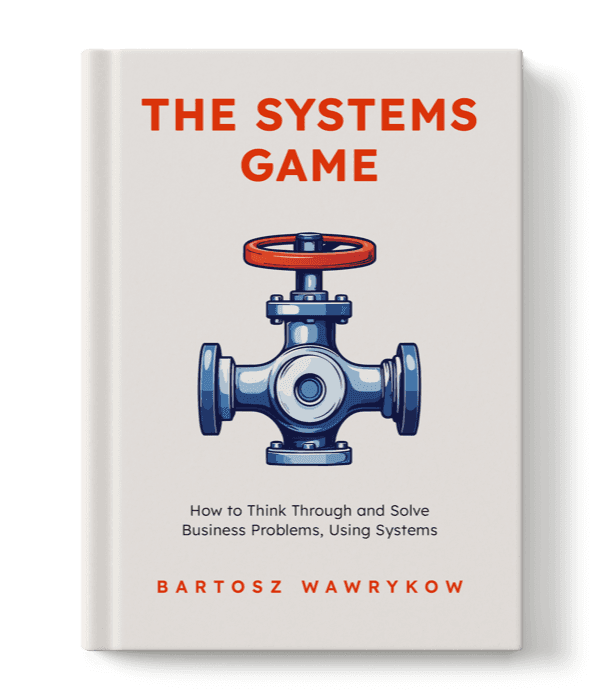
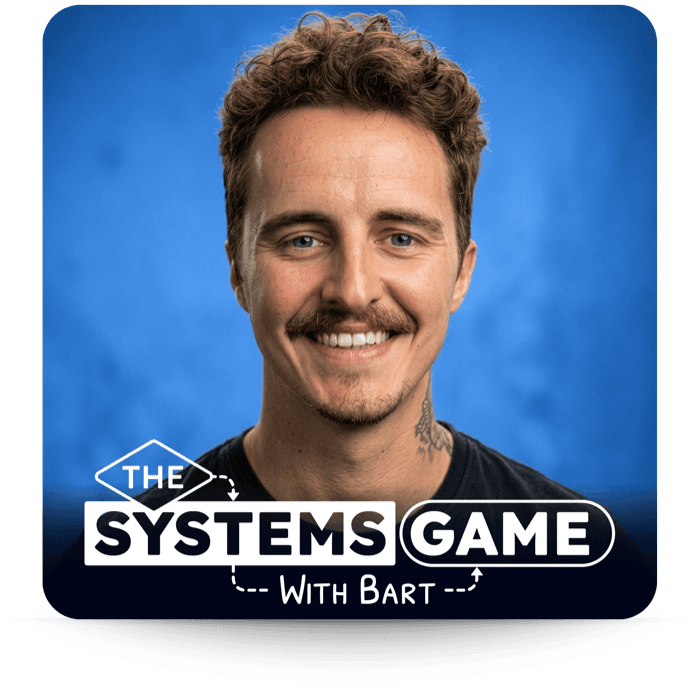
The Systems Game podcast.

We publish what we are learning as we are learning it — conversations with operators about the systems that compound, and the ones that quietly fall apart.

Where we look

Businesses with a system underneath them.

We are not sector tourists. These are the kinds of business where the work is repeatable enough that a good operating system compounds — and where we already have enough context to be useful in the first month rather than the first year.

B2B software

Small, unglamorous software businesses serving a market that already knows it has the problem. Recurring revenue makes the effect of a better operating system visible within a quarter rather than a decade.

Repeatable services

Service businesses where the same job is delivered many times over. The margin lives in how consistently the work is run, which is exactly what a shared spine of playbooks is for.

Supplier-side commercial

Businesses that sell into institutional buyers through processes rather than conversations. Winning that work is a systems problem — evidence, cadence, and follow-through, held to a consistent standard.

Operations-heavy trading

Companies where the constraint is coordination rather than demand. When the bottleneck is scheduling, stock, or handovers, better instrumentation beats more headcount.

Founder transitions

Profitable businesses whose founder wants out of the day-to-day without selling to someone who will strip them. We are a plausible answer for owners who care what happens next.

Things we build ourselves

Where no one is serving a market we understand, we build rather than buy. Internal tooling that survives contact with our own companies sometimes turns out to be a business in its own right.

Joining

What it looks like when a company joins Scallle.

We are not currently accepting new portfolio companies — we are at capacity with the ones we already hold. This is what the arrangement looks like when we reopen, so you can decide long before we talk whether it is the shape you want.

The operating spine

Finance, hiring, go-to-market and customer ops, installed from a shared set of playbooks in the first ninety days — then refined until they fit your business rather than our template.

Capital without a clock

Funding from operating cashflow rather than a fund. No drawdown schedule, no LP reporting cycle, and no obligation to manufacture an exit on somebody else’s timetable.

Operators, not observers

You keep running the company. We are close enough to be useful in the week that is actually happening, and far enough away that the business keeps its own character.

Terms agreed up front

Ownership, autonomy, reporting cadence and what we each commit to — written down before anything changes hands, not discovered a year later.

Not accepting new portfolio companies right now.

We will reopen when we have the bandwidth to do a new company justice. If you want the earliest signal, The Systems Game is where we think out loud — and the form reaches the founder directly.

Get in touch anyway

How ownership actually works here

Close enough to be useful. Far enough to stay out of the way.

The hardest part of a holding company is knowing where the line sits. Ours is drawn in three places, the same way in every company we hold — and written down before we start rather than argued about later.

How we work

The operator runs the company

Day-to-day authority stays with the person doing the job. We do not run companies by committee from a holding-company office.

One reporting rhythm

The same short set of numbers, on the same cadence, in every company we hold — so a problem surfaces in weeks rather than at year end.

Terms written down first

Ownership, autonomy and what each side commits to are agreed before anything changes hands, not renegotiated once it is inconvenient.

FAQs

Frequently Asked Questions

The things operators and founders ask before a first conversation. If you don’t see yours, the form reaches us directly and we answer within a few working days.

A podcast about scaling businesses through systems.

Conversations with operators, founders, and builders about the systems that compound — and the ones that quietly fall apart. Hosted by the team behind Scallle.